Live Dental Webinars
(Showing Next 5 Upcoming)
|
 Digital Implant Surgery: How 3D Printing changes the Guided Surgery Workflow Digital Implant Surgery: How 3D Printing changes the Guided Surgery Workflow
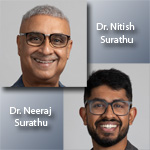
Presenter: Dr. Nitish Surathu and Dr. Neeraj Surathu
Sponsor: Rapid Shape
| Tue |
10/27/26 |
7:00 PM ET
4:00 PM PT
|
| Tue |
10/27/26 |
11:00 PM UTC
|
|
CE Credits: 1 Interactive CEU
|
|
This CE webinar explores how 3D printing is transforming the digital workflow for guided implant surgery, from treatment planning through surgical guide fabrication and implant placement. Participants will learn how to integrate CBCT and intraoral scan data, evaluate implant planning software, and develop predictable treatment plans using digital technology. The webinar will also cover the design, 3D printing, and post-processing of surgical guides and restorations, with a focus on applying guided surgery protocols to improve implant accuracy, efficiency, and patient outcomes.

|
From Inspection to Resolution 2026: Real Cases of How Dental Practices Navigated OSHA Investigations
Presenter: Dr. Karson Carpenter
Sponsor: Compliance Training Partners
| Wed |
10/28/26 |
7:00 PM ET
4:00 PM PT
|
| Wed |
10/28/26 |
11:00 PM UTC
|
|
CE Credits: 1 Interactive CEU
|
|
In this one-hour CE webinar, Dr. Karson Carpenter, president of Compliance Training Partners, will review actual OSHA inspection cases that he and his technical team have been involved with in the last 12 months. The webinar will show actual citations and how the inspection progressed from notification of inspection to onsite visit, receipt of fine, and resolution.

|
Digital Workflows for Predictable Adult Orthodontic-Restorative Treatment Implementing a Digital Ecosystem
Presenter: Dr. Melissa Shotell
Sponsor: ClearCorrect
| Thu |
10/29/26 |
7:00 PM ET
4:00 PM PT
|
| Thu |
10/29/26 |
11:00 PM UTC
|
|
CE Credits: 1 Interactive CEU
|
|
Adult patients are the largest growing population seeking orthodontic treatment. Many adult patients seek clear aligners as an esthetic alternative to traditional bracket and wire treatment. Yet many adult patients present with complex restorative treatment needs that can be complimented by orthodontic treatment for improved clinical outcomes with interdisciplinary treatment plans. Adult patients require a different patient experience and seek convenient and efficient treatment. The course will cover the basics of aligner design, materials, and mechanical advantages to understand the importance of product selection in complex adult treatment plans. The CE webinar will also explore the digital workflow and digital ecosystem for office efficiency and optimal patient experience. After the webinar, the attendee should be able to evaluate and select an aligner system for complex interdisciplinary cases, and evaluate how to implement a digital workflow for enhanced treatment planning and patient experience.

|
Smarter Smile Design: Align, Whiten, and Restore
Presenter: Dr. Nicholas Garcia
Sponsor: uLab Systems
| Mon |
11/2/26 |
7:00 PM ET
4:00 PM PT
|
| Tue |
11/3/26 |
0:00 AM UTC
|
|
CE Credits: 1 Interactive CEU
|
|
In this CE webinar, join Dr. Nicholas Garcia for a practical discussion on integrating clear aligners into everyday esthetic dentistry - particularly for patients considering whitening, veneers, or other cosmetic improvements. Using a scan-first approach, Dr. Garcia will demonstrate how he evaluates tooth position, spacing, and occlusion before developing a treatment plan. Attendees will learn how to determine when to align, when to restore, and when combining treatments may create a more conservative and predictable path to the desired esthetic outcome. The webinar will provide a straightforward framework for recognizing anterior esthetic aligner opportunities, sequencing complementary services, and confidently presenting comprehensive treatment options to patients.

|
Oral Cancer Screening: It’s More Than Grasping the Tongue
Presenter: Susan Cotten, BSDH, RDH, OMT
Sponsor: VOCO America
| Tue |
11/3/26 |
7:00 PM ET
4:00 PM PT
|
| Wed |
11/4/26 |
0:00 AM UTC
|
|
CE Credits: 1 Interactive CEU
|
|
Both dental hygienists and dentists play an important role in the early detection of oral cancer, yet there is a critical gap in screening protocols. After performing an oral cancer screening, patients often say, "No one has ever done that before." This CE webinar breaks down the components of a comprehensive visual and tactile, extraoral, and intraoral evaluation, and the signs and symptoms associated with oral and oropharyngeal cancer as an important component in screening. Using Susan’s instructional screening videos and case presentations, attendees will learn proper extraoral palpation, the importance of identifying lymphadenopathy, evaluation of the thyroid gland, and the oropharynx. ADA and ADHA oral cancer policies and coding will be reviewed.
A comprehensive oral cancer screening isn’t optional. Let’s close the gap together, elevate the standard of care in screening, calibrate dental professionals nationwide, and increase early detection. Attendees will leave inspired and with a renewed commitment to performing this life-saving evaluation – every patient, every visit.
Featured On-Demand CE Webinars
It seems so easy doesn’t it? Yet most people struggle with one or more aspects of direct composites. In this CE webinar, join us as we break down the common areas that we struggle with and explain simple solutions to those problems.
In this CE webinar, participants will be guided through current digital workflows where critical decisions must be made. Analog versus scanned impressions, milling versus printing, and finally materials choices that can enhance outcomes will be discussed. Participants should leave this webinar with a more complete understanding of the decisions necessary for most restorative applications, along with an understanding of some of the materials that will optimize the end result.
This is not your father's composite webinar. Dr. John Gammichia, a full time private practice dentist, lives in the real world. A world where people break cusps and can't afford a build-up and onlay/crown. So what do you do? Pull it?! How about an exquisite 2,3,4 or 5 cusp composite restoration? Of course, we will start with the class I and the class II restorations. We will of adhesion and some of the current biomimetic philosophy. Then we will build from this knowledge. How do you handle uncomfortably big restorations or deep decay? How about big AND deep restorations? How about cracks? Lastly, we will discuss your obstacles to this type of dentistry...do they last or can I make any money doing dentistry this way? This CE webinar will be fun but Dr. Gammichia wants you to feel a little uncomfortable...you will be challenged. By the end of the webinar you will be saying "Holy Cow! I Didn't Know You Could do that with Composite."
Featured Podcast Episodes
 Series: VOCO America
CE Credits: 0.5
Series: VOCO America
CE Credits: 0.5
Guest: Tiffany Wuebben, RDH
|
Hygiene has always been viewed as important in dentistry—but what if it’s actually the most underutilized growth engine in the entire practice and the key to elevating the overall patient experience? On today’s episode, we’re unpacking what it really means to optimize the hygiene department and how that shows up in a dentist’s day-to-day life when it’s done right. Because when hygiene is empowered to do more, patients don’t just feel “cleaned”—they feel educated, cared for, and connected to the practice. Our guest is Tiffany Wuebben, RDH and Founder and CEO of The Hygienepreneur.
 Series: Bisco
CE Credits: 0.5
Series: Bisco
CE Credits: 0.5
Guest: Dr. Luis Abrahante
|
On today’s episode, we’re talking with an inspiring young dentist whose story is nothing short of amazing. Meet Dr. Luis Abrahante—he came to the U.S. from Cuba at just 18 years old, not knowing a word of English. Fast forward to age 31, and he’s already paid off his dental school loans, bought his own practice, and turned it into a fully digital, high-end aesthetic dentistry hub. He shares with us how he did it along with his favorite dental materials.
Series: VOCO America
CE Credits: 0.5
Guest: Dr. Avi Patel
|
In this episode, we take a real-world, no-hype look at what it actually takes for general dentists to succeed with aligners. We talk about why our guest first brought clear aligner therapy into his practice, the game-changing role of mentorship, common mistakes that can derail cases, and practical clinical pearls—especially when it comes to attachments and case selection. Our guest is Dr. Avi Patel, general dentist and founder of Clear Aligner Advisor. He’s helped hundreds of dentists successfully integrate aligner therapy into their practices through hands-on training, mentorship, and real-world implementation support. Dr. Patel can be reached at https://www.clearaligneradvisor.co/









 Posterior Direct Adhesive Dentistry: Common Pitfalls and Simplified Solutions